God's Sovereignty Amid Crisis
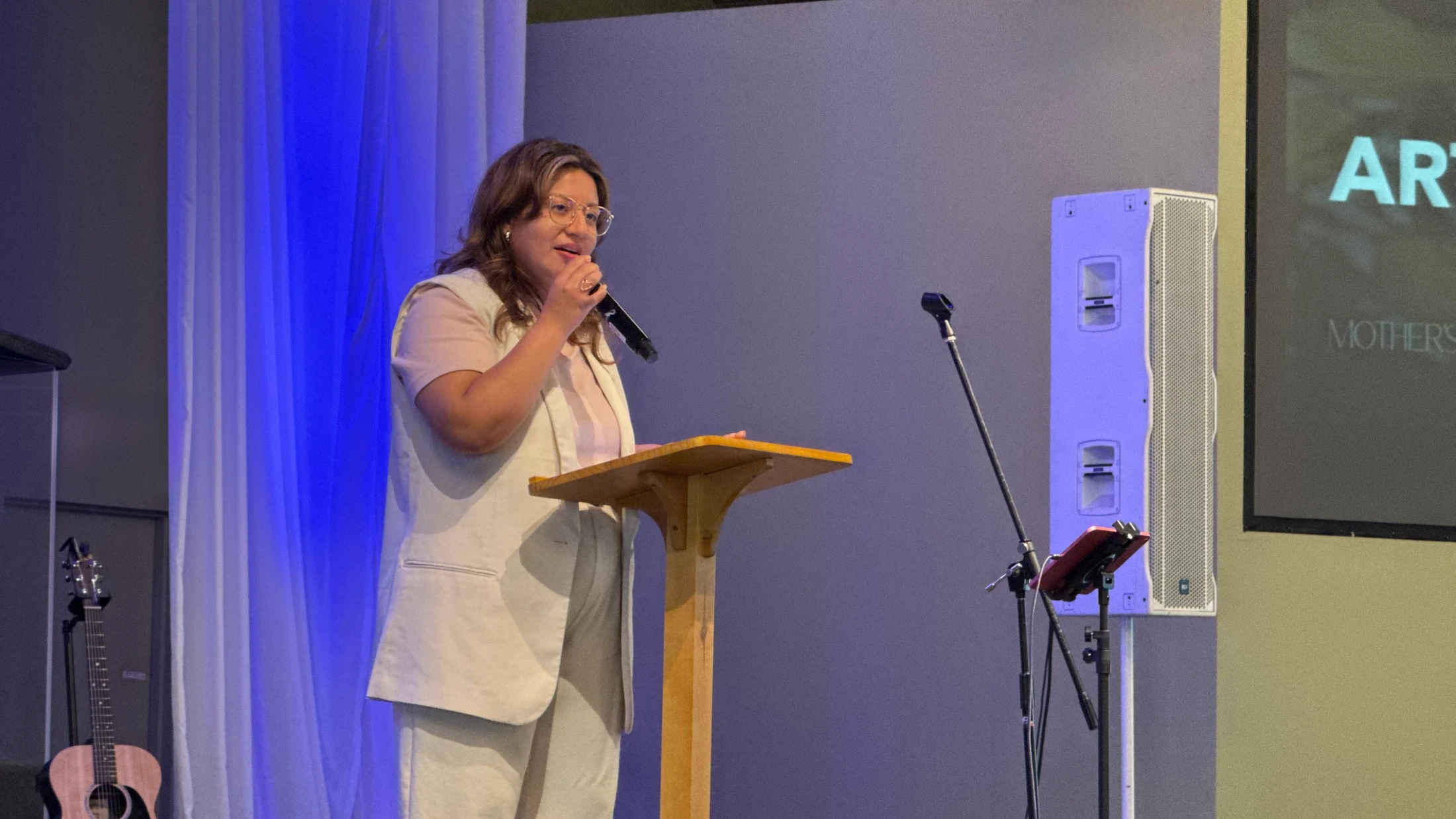
God's Sovereignty Amid Crisis
by Pastor Dania Ramirez
Life has a way of bringing both beauty and heartache into the same moment. Some seasons hold celebration and grief side by side, joy and longing intertwined. The truth is, God created our emotions and welcomes the full range of what we feel. There's room in His presence for both the joyful and the heavy.
This reality becomes especially clear when we look at the story of Queen Esther—a young woman who understood what it meant to walk through life carrying both privilege and profound loss.
The Woman Behind the Crown
Esther's story begins in a place of devastation. She was an orphan, having lost both parents at a young age. As a descendant of Jews carried into exile during the time of King Nebuchadnezzar, she was born into displacement—part of a people group that had suffered persecution, disease, and death for over a century.
Her cousin Mordecai raised her as his own daughter. By the time she became queen of Persia under King Ahasuerus, she was likely only 14 to 16 years old. Her life didn't follow a normal trajectory. She knew intimately what it felt like to walk into a room and feel the weight of what was missing.
Even her name tells a story of hidden identity. "Esther" was her Persian name, meaning "star"—likely referring to her outward beauty. But her true Hebrew name was Hadassah, meaning "myrtle tree." In Scripture, the myrtle tree symbolizes peace and restoration, representing God's promise to replace devastation with blessing (Isaiah 55). History remembers her as Esther, but her covenant identity was Hadassah—a beautiful picture of God bringing restoration in the middle of devastation.
Crisis at the Palace Gates
When we meet Esther in chapter four of her story, a crisis has erupted. Haman, a powerful official in the Persian Empire, has manipulated the king into authorizing the destruction of all Jewish people across the kingdom. The plot was born from wounded pride—Mordecai had refused to bow to Haman, and in retaliation, Haman sought to annihilate an entire people group.
Esther had been hiding her Jewish identity for survival. But when crisis came, it was time to return to her true self. Mordecai's words cut through her fear: "Maybe you have come to your royal position for such a time as this" (Esther 4:14).
This moment forces us to ask an essential question: Who are we in moments of crisis?
Returning to Our True Identity
Isaiah 43:1 declares: "This is what the Lord says—He who created you, He who formed you: Do not fear, for I have redeemed you; I have summoned you by name; you are mine."
Our true identity is not found in the roles we play or the names others have given us—whether helpful or harmful. Before we are anything else, we belong to the Most High God. We are His before we are anything else.
For those who are mothers, this truth is foundational: before you are a mom, you are first a daughter of God. Before your role, your job, your position in your family, your accomplishments or your mistakes—because of Jesus' work on the cross—you are first invited to belong as a son or daughter of God.
We are not accidents. We are named. We are His.
Esther returned to her true identity. She went from being Esther the queen in the palace back to being Hadassah—a young girl chosen by God to bring blessing in the middle of devastation.
Where Is God in the Crisis?
This brings us to perhaps the heaviest question: Where is God in the midst of crisis?
God reveals His character in Exodus 34:6: "The Lord, the Lord, the compassionate and gracious God, slow to anger, abounding in love and faithfulness." This is who God is—whether we are in crisis or not.
Through Esther's story, we see something powerful: God is always intentionally working behind the scenes. He never stopped moving, providing, or making a way for Esther. She didn't choose her circumstances—she was an orphan, an exile, a refugee, and a woman in a male-dominated empire. Yet God was still at work, moving and shifting things in miraculous ways.
Esther went from thinking, "I didn't choose this—I'm just surviving this," to realizing, "Maybe I am positioned here by a God who is in control of all things."
The same is true for us. You may not have chosen the family you grew up in, the challenges you've faced, the wounds you carry, or the circumstances you wish were different—but God is still behind the scenes, working and moving for our good and His glory.
The Reality of Evil and God's Sovereignty
There's an important truth we cannot ignore: evil was very real in Esther's story. Haman's plot was wicked, manipulative, and destructive. But here's the biblical truth: God is bigger than evil.
Evil and God are not equals. God is sovereign and above all things—including evil. He does not cause evil, but He is above it, and He can redeem it and make good from it.
God hates evil because it opposes His nature and harms the people He loves. Psalm 5:4 says, "You are not a God who delights in wickedness; evil does not dwell with You." Evil does not flow from God's character. He is holy, pure, just, and good.
Yet Scripture also shows us that evil is never outside of His control. God permits human free will and allows evil for a time in this fallen world, but He also limits it, restrains it, judges it, and ultimately weaves even painful things into His greater redemptive story.
What the enemy means for destruction, God can redeem for His glory and for our good (Romans 8:28, Genesis 50:20).
The Art of Pausing
Esther's response to crisis teaches us something critical. She didn't immediately rush into action. Verse 11 shows her humanity—she was afraid. Her first instinct was to stay silent.
But after Mordecai's challenge, Esther paused. She said, "Go, gather all the Jews...fast for me...I and my attendants will fast as well. When this is done, I will go to the king...And if I perish, I perish."
Before making decisions—especially big ones—there is an art of pausing to seek the Lord. James 1:5 reminds us: "If any of you lacks wisdom, you should ask God, who gives generously to all without finding fault, and it will be given to you."
Because Esther paused to fast and pray, she received the courage and wisdom necessary to do what felt impossible. That was her part. And God's part? He continued working victory behind the scenes.
Through careful timing and divine providence, a chain of events unfolded: the king had a sleepless night, Mordecai's loyalty was discovered, Esther revealed Haman's plot at the right moment, and the destruction Haman planned became his own downfall. The Jewish people were saved.
Our Part and God's Part
Esther did her part—she returned to her true identity and paused to seek God. And God did His part—working behind the scenes in ways she could never control or see.
The same partnership is available to us. We can do our part and trust God fully to do His. We can release control of what we were never meant to carry and trust that God is fully in control.
In crisis moments and in every moment, God will always be in control—more than we will ever be. He continues working behind the scenes in ways we might never see. Even through painful circumstances, He accomplishes His purposes and brings good from them.
You belong to God. You are called by name. And you are His own. That is your true identity—your firm foundation in every season, every crisis, every moment of joy and sorrow alike.
This article was adapted from a sermon shared at Armonk Alliance Church on May 10, 2026.