The Other Half of Prayer
The Other Half of Prayer
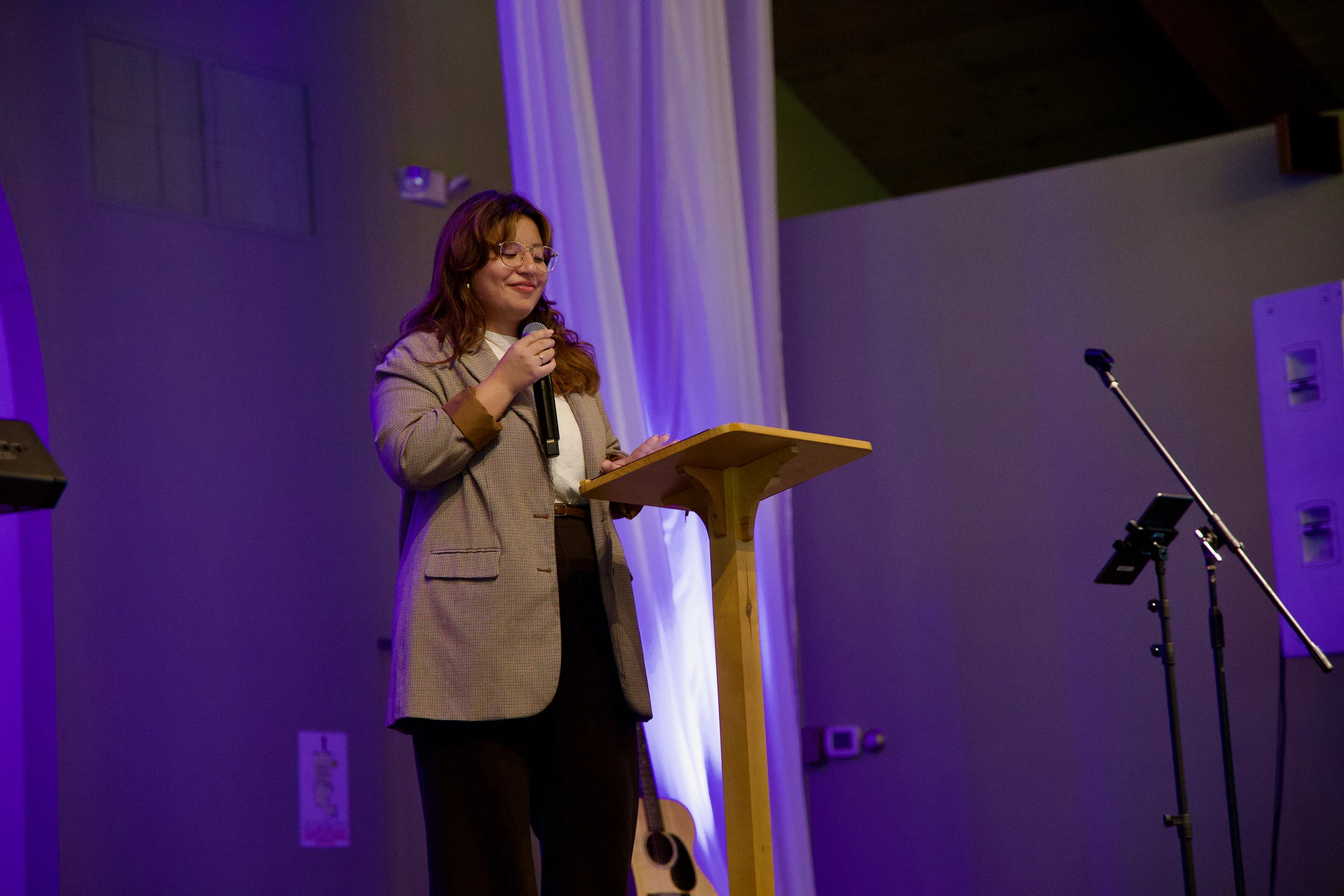
by Pastor Dania Ramirez
Most of us know how to talk to God. We bring our requests, our worries, our gratitude, and our confessions. We pour out our hearts and then we move on with our day. But what if we have only been practicing half of what prayer is meant to be? What if the most transformative part of our relationship with God is not just what we say to him, but that we also learn to hear from him?
Prayer is not a one-way pipeline only for requests. It is a conversation rooted in a loving relationship, and like any healthy relationship, it requires both speaking and listening. This is the pattern modeled by Jesus himself.
Jesus: A Praying Savior
Though Jesus is the Son of God, fully God and fully man, he prayed constantly. He woke up early and withdrew often to solitary places to pray and commune with the Father. He interceded for his disciples, for future believers, and even for those who were crucifying him. Romans 8 reminds us that even now, seated at the right hand of the Father, Jesus continues to intercede for us. He has never stopped praying on our behalf.
But why? Why would the Son of God, who possesses all wisdom and all authority, consistently choose prayer? The answer reshapes everything we think we know about it. For Jesus, prayer was not transactional. It was not a mechanism for getting things done. It was the natural expression of a deeply loving, ongoing relationship with his Father.
And that is exactly what we are invited into as well.
Three Expressions of Prayer
There are many ways we engage with God in prayer. Two of the most familiar are intercessory prayer and supplication prayer.
Intercessory prayer is stepping into the space between someone's need and God's power. It is what Jesus modeled when he told Peter in Luke 22 that he had been praying for him. It is what he demonstrated in John 17 when he prayed for the unity of all future believers, including you and me.
Supplication prayer is personal prayer. It is bringing your own heart, your own needs, your own burdens before God. Psalm 62 calls us to pour out our hearts to him, because he is our refuge. We see Jesus model supplication prayer most clearly in Matthew 26 when we see him in the garden, hours before the cross, pouring out his heart to the Father. He expressed both deep anguish and complete trust. He did not perform. He was honest. And that is the kind of honesty the Father invites every one of us into. God is the safest person you will ever know. He will never use your honesty against you. He already knows your heart and he welcomes you fully.
There is another expression of prayer that often goes underdiscussed, and yet it may be the most transformative of all: listening prayer.
The Other Half
In John 5:19-20, Jesus says something remarkable. He tells the religious leaders that the Son can do nothing by himself. He can only do what he sees the Father doing. The Father loves the Son and shows him all he does.
Scholars note that the language Jesus uses here is deeply relational and in the present tense. This is not talking about a past instruction. This is pointing to an ongoing, living, attentive relationship. Jesus was not simply executing a predetermined mission alone. He was continually abiding, listening, and aligning himself with the Father's heart and purposes. Throughout the Gospel of John, we see this pattern in Jesus’ life and ministry. In John 7, Jesus moves according to the Father's timing rather than the pressure of those around him. In John 8, he pauses before responding, listening for the Father's wisdom. And in John 12, Jesus states again that he speaks only what the Father has told him to say.
This was not weakness or lack of wisdom on Jesus part. This was about his relationship of love with the Father.
And we are invited into the same.
Learning to Recognize His Voice
In John 10, Jesus says that his sheep hear his voice, that he knows them, and that they follow him. God is not distant. He is not silent. He is a Father who draws close, who kneels to our level, and who says, can I tell you something?
And he wants to teach us to listen, so that we can receive something important from him.
Two reliable guidelines help us discern hearing from God. First, his voice will always align with Scripture. The same Holy Spirit who inspired the writing of God's word is the same Spirit who guides us today. He will not contradict himself. Second, his voice will always be consistent with the fruit of the Spirit. Love, joy, peace, patience, kindness, goodness, faithfulness, gentleness, and self-control as described in Galatians 5. The Holy Spirit convicts, but he does not condemn. He does not produce shame or anxiety. His voice leads from and produces the fruit of the Spirit.
Prayer and the People Around You
Here is where listening prayer becomes very practical in evangelism. When we learn to listen to the Father, we begin to notice where he is already at work in the lives of the people around us. Evangelism stops feeling like a program we have to execute and starts feeling like a relationship we get to participate in.
Jesus cares more about the salvation of your friend, your neighbor, your coworker than you do. So why not ask him how he wants to reach that person? Why not pray for them by name, make space to listen, and then ask, Father, what are you already doing? How can I join you? Who do you want me to notice? How can I love that person well?
This is the heart of faithful witness. Not forcing agendas. Not manufacturing conversations. Simply being attentive enough to recognize what God is already doing and willing enough to step into it.
An Invitation
Prayer is not about finding the perfect words. It is not about performance. It is about a loving relationship with a Father who delights in hearing from you and who also wants to teach you how to hear from him.
So would you make space for the other half of prayer?
Intercede for others and pour out your heart before the Father because He loves you. And then, be still and listen. Ask him if he wants to say anything to you. You may be surprised by what a loving Father has been waiting to share.
This article was adapted from a sermon shared at Armonk Alliance Church on July 26, 2026.