When God Cuts Down the Tree
When God Cuts Down the Tree
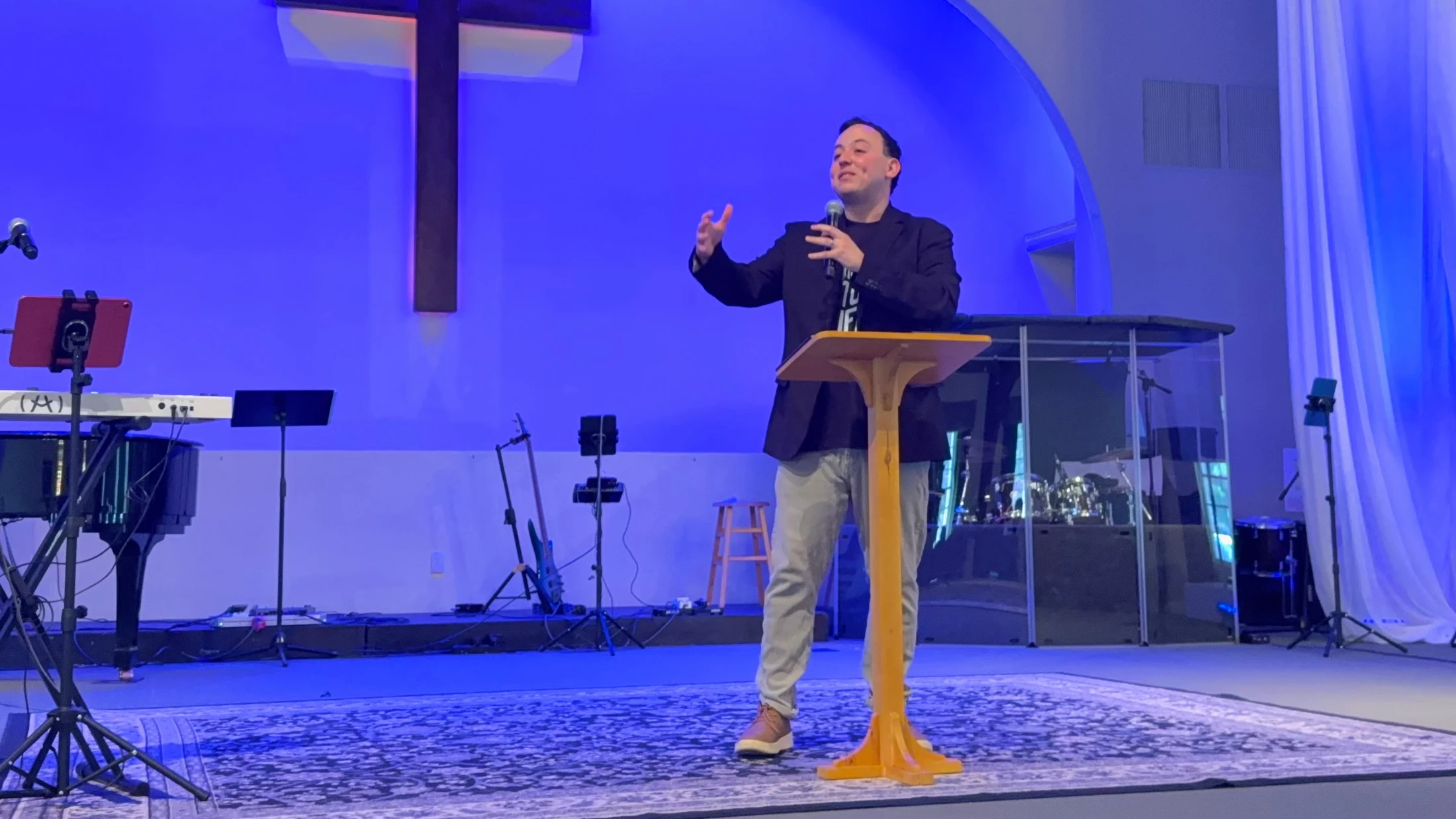
by Pastor Carlos Ramirez
There’s something jarring about seeing a massive tree fall.
One day it stands tall above everything around it. Strong. Steady. Untouchable. Birds nest in its branches. People rest in its shade. It looks permanent.
Then suddenly it’s on the ground.
Sometimes the damage started long before anybody noticed.
That’s the picture God gave King Nebuchadnezzar in Daniel 4.
A Dream That Exposed the Root
Nebuchadnezzar ruled Babylon, the most powerful empire in the world at the time. He had wealth, military power, influence, servants, palaces, and cities built in his name. If anybody had reason to believe they were self-made, it was him.
Then he had a dream.
In the dream stood an enormous tree in the middle of the earth. It stretched into the sky and could be seen from everywhere. Its branches were full, its fruit abundant, and animals gathered beneath it for shelter and food.
It was a picture of strength and flourishing.
Then a messenger from heaven spoke:
“Cut down the tree.”
Its branches would be stripped. Its fruit scattered. Only the stump would remain.
Then the dream shifted. The tree was no longer just a tree. It represented a person who would lose his mind and live like an animal for seven years.
When Daniel interpreted the dream, he told the king plainly:
“You are that tree.”
Nebuchadnezzar’s kingdom looked impressive on the outside, but pride had grown deep beneath the surface.
That was the real danger.
When Success Turns Inward
Pride rarely looks dangerous at first. Most of the time it looks successful.
It sounds like:
“I built this.”
“I earned this.”
“I deserve this.”
“This exists because of me.”
The scary thing about pride is that it slowly pushes God further and further out of the center. Gratitude disappears. Dependence disappears. Eventually even humility starts feeling unnecessary.
Scripture speaks very strongly about pride. Proverbs says God hates “haughty eyes.” James writes that “God opposes the proud but gives grace to the humble.”
Not dislikes. Opposes.
Daniel warned Nebuchadnezzar to repent. To humble himself. To care for the oppressed. To turn from his arrogance while there was still time.
And for an entire year, nothing happened.
The judgment didn’t come immediately. God gave him space to respond.
The Fall of the Tree
But twelve months later, Nebuchadnezzar stood on the roof of his palace overlooking Babylon and said:
“Is not this the great Babylon I have built by my mighty power and for the glory of my majesty?”
That sentence revealed everything.
The problem was never the kingdom. The problem was ownership. Nebuchadnezzar looked at gifts from God and treated them as monuments to himself.
Before the words even left his mouth, the judgment came.
The king lost his throne, his stability, and eventually even his sanity. He was driven away from people and lived in the fields like an animal for seven years.
It sounds extreme until you realize what God was doing.
God was not humiliating Nebuchadnezzar for entertainment. He was confronting the thing destroying him.
Pride had wrapped itself around the king so tightly that collapse was the only thing left capable of waking him up.
When Nebuchadnezzar Finally Looked Up
Then comes one of the most important lines in the chapter:
“At the end of that time, I raised my eyes toward heaven, and my sanity was restored.”
That’s the turning point.
Not when he rebuilt something.
Not when he proved himself again.
Not when he regained power.
When he looked up.
Pride turns us inward. Humility lifts our eyes outward and upward.
And once Nebuchadnezzar finally saw God rightly, he began seeing himself rightly too.
His kingdom was restored, but the bigger miracle was that his heart changed. The man who once glorified himself ended up praising God publicly:
“Those who walk in pride he is able to humble.”
A Warning Belshazzar Ignored
Then Daniel 5 shows what happens when somebody refuses to learn that lesson.
Nebuchadnezzar’s successor, Belshazzar, knew the story. He knew what pride had done to the king before him. Yet he still mocked God openly during a royal banquet using sacred vessels stolen from the temple.
That night a hand appeared and wrote on the wall:
“Mene, Mene, Tekel, Parsin.”
Daniel interpreted the message. Belshazzar had been weighed, measured, and found wanting.
His kingdom fell that very night.
One of the saddest lines in the chapter is when Daniel tells him:
“You knew all this.”
That’s what makes pride so dangerous. It can survive warnings. It can survive examples. It can survive watching other people fall and still whisper, “That won’t happen to me.”
But eventually pride collapses under its own weight.
The Invitation to Humility
The invitation in these chapters is actually full of grace.
Humble yourself before life humbles you.
Recognize where your strength, provision, opportunities, and breath actually come from.
Success is not the enemy. Influence is not the enemy. Leadership is not the enemy.
Pride is.
And God loves us enough to confront it before it destroys us completely.
This article was adapted from a sermon shared at Armonk Alliance Church on May 17, 2026.